

Exponential Organizations
“Changing the way people work is not a small ambition. It is as bold as any purpose I have seen, because when you transform work, you transform lives, communities, and ultimately, society itself. This book shows how.”
“No one should confuse income for virtue, net worth for worthiness. The underlying reality is that capitalism is not working as it should or as it can.”
— Robert B. Reich, Saving Capitalism
The game is rigged.
At least, that's the way most of us feel as we see our working hours and stress levels increase, while the rising cost of living surpasses our income growth, and our savings continue to wither away. Whether working for a corporation or as an entrepreneur trying to grow your business, capitalism isn't working the way it did for previous generations.
When the stock market crashed in 1929, the Great Depression scarred the hearts and souls of most of America. Shortly after, the government and its people acted. Capitalism was simply at a stage in its evolution when changes were needed. We believe that we are at such a point again. We're not predicting another crash — what we're saying is that capitalism needs adjustments that align with the wants and needs of today's workforce.
Since the legal invention of corporations, people in power have implemented a command and control structure built around a manager/employee relationship. Someone at the top of the pyramid uses increasingly senior people to manage less expensive junior contributors who produce the profit. This has been the traditional way businesses have maintained order since the Industrial Age. As time has passed, technology has evolved and societal norms have changed, resulting in an outdated system that has grown increasingly inequitable, inefficient, and intolerable for the vast majority of its participants.
From Chapter 1 — Collective Capitalism
Read the BookGrounded in practice, not theory.
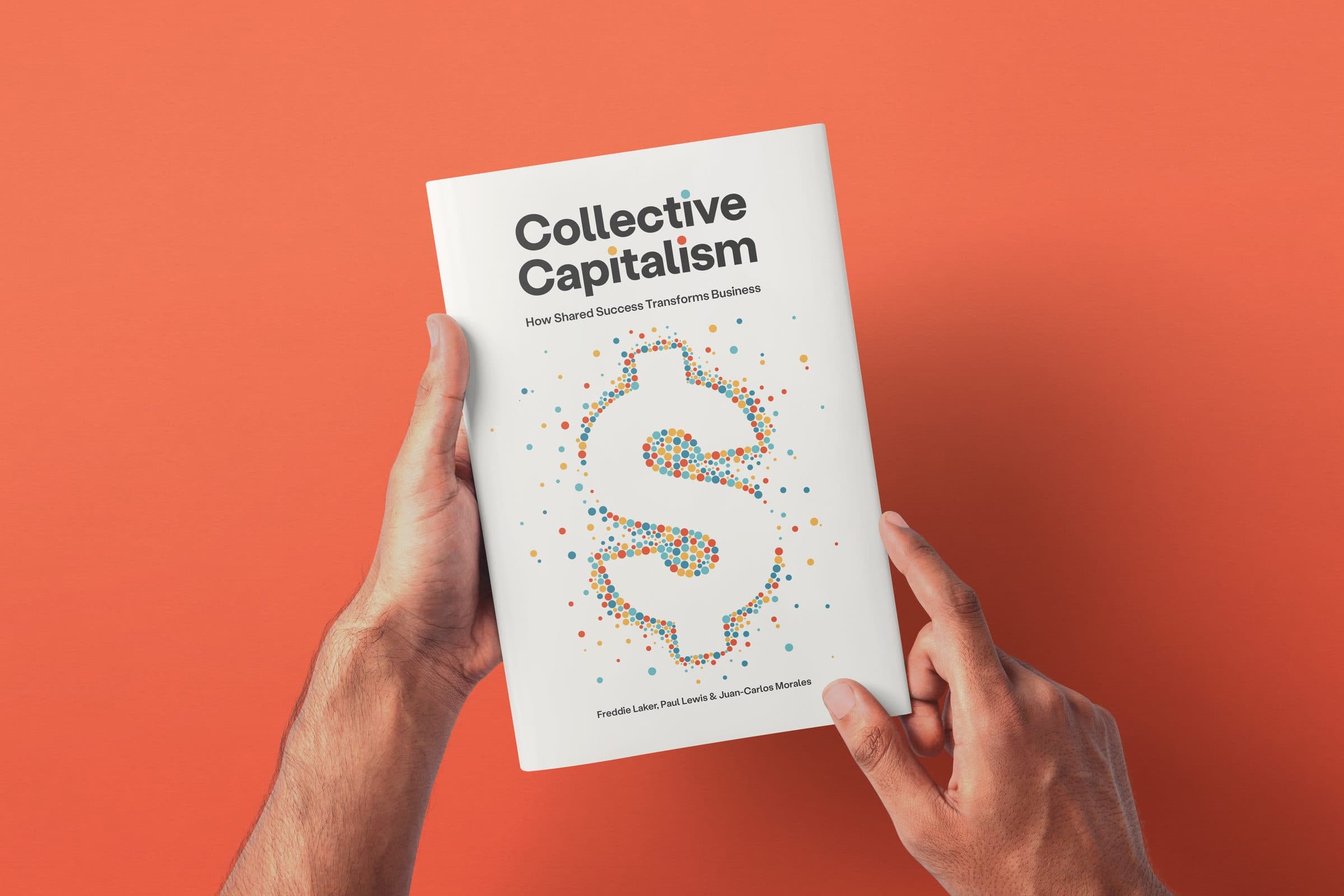
Collective Capitalism challenges the assumption that businesses must choose between hierarchical efficiency and equitable ownership. Drawing on years of real-world experience building the Chameleon Collective, the authors present a proven model for organizing professional work that benefits everyone involved.
Every chapter is grounded in the mistakes, breakthroughs, and frameworks that emerged from actually doing the work — not from observing it.
Whether you are a consultant, designer, developer, or any other professional, this book gives you the roadmap for building something you truly own.
From the foundational tenets of Culture, Trust, and Sharing through governance, financial models, and scaling — the complete playbook the movement has been waiting for.
Built for people who are done waiting for someone else's permission
You're excellent at what you do but tired of being a vendor. You want ownership of what you build, compensation that reflects your real contribution, and work that feels like it's actually yours.
You've built something real but the model is working against you. Talent cycles in and out, margins are thin, and you're the last one standing when things get hard. There's a better structure.
You've spent years inside hierarchy that doesn't reward contribution. You're done waiting for a promotion that reflects your value. You're ready to build something you actually believe in.
You're already running something collaborative and it's working. You want the governance frameworks, financial models, and operating structures to make it official, scalable, and fair.
Built with the collective model. Proven by running it.
Year 1 to Year 7 at Chameleon Collective — using the exact model in this book.
Founded in 2015. Still operating. Still growing. No external investors. No hierarchy.
Named by Forbes in 2024 — recognized for the culture and model the book describes.
Chapter highlights
Each chapter builds on the last, taking you from understanding the philosophy to implementing it in your own collective.
The Case for Collectives
Why traditional business models fail professionals, and how Collective Capitalism offers a better path for talented people who want ownership over their work.
Culture, Trust & Sharing
A deep dive into the three tenets that form the foundation of every successful collective, with practical examples of how to cultivate each one.
Governance Frameworks
From handshake agreements to formal governance structures — how to design decision-making processes that scale as your collective grows.
Financial Models & Profit Sharing
Detailed financial frameworks for structuring compensation, distributing profits equitably, and maintaining financial health as a collective.
Member Vetting & Onboarding
How to find the right people, assess their fit for collective life, and onboard them in a way that strengthens your culture.
Scaling Your Collective
Strategies for growing without losing your soul — maintaining culture and governance integrity as your collective expands.
The Chameleon Collective Case Study
An in-depth look at how the Chameleon Collective was built, the mistakes made, the lessons learned, and the model that emerged.
Your Collective Playbook
Actionable templates, checklists, and frameworks you can use to start building your own collective today.
Practical knowledge you can apply immediately
How to structure ownership so every member has a genuine stake
Governance models that balance efficiency with democratic participation
Financial frameworks for equitable profit sharing
How to vet and onboard members who strengthen your collective
The three tenets — Culture, Trust, and Sharing — and how to cultivate them
Strategies for scaling without losing your founding principles
Legal and operational considerations for forming a collective
Real-world lessons from the Chameleon Collective's journey
The Authors
Three founders, three different doors, one operating system

Freddie Laker
Freddie built Chameleon Collective from $1.75M in year one to $32M projected by year seven using the collective model. He has led transformation projects for brands including Starbucks, Mastercard, and T-Mobile — proving that the collective structure can compete and win in the most demanding professional services markets.
Juan-Carlos Morales
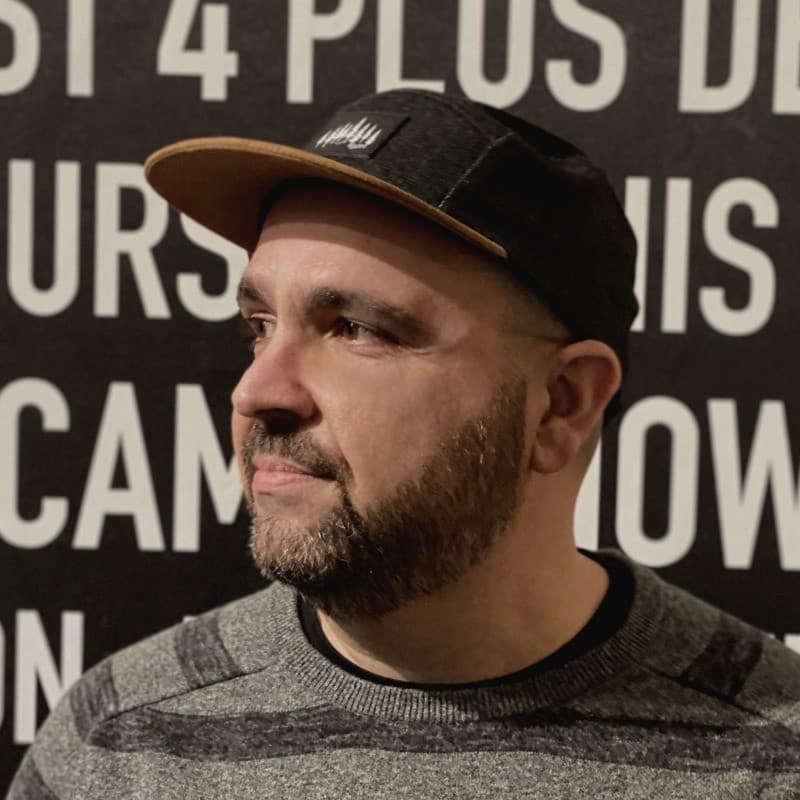
Juan-Carlos has led design and brand strategy for some of the world's most recognizable companies. He brings 20+ years of experience across agency and in-house roles, and is the architect of the visual and strategic language that defines Collective Capitalism as a movement.

Paul Lewis
Paul has served as CMO and senior marketing leader at multiple organizations, building and scaling marketing functions from the ground up. He brings the perspective of an executive who has lived the collective model from the inside — and can speak to what it means to lead within one.
Common questions about the book and the model
What is Collective Capitalism?
Collective Capitalism is an economic model where talented professionals own their work, share profits equitably, and govern together. It's a third path between traditional employment and solo entrepreneurship — a proven structure that has outperformed traditional firms for 180 years, from the 1844 Rochdale Pioneers to Mondragon's $14B network today.
Who is this book for?
The book is for professionals who want ownership over their work — consultants, designers, engineers, marketers, lawyers, and accountants who are tired of choosing between the security of employment and the risk of going solo. It's also for founders building professional-services businesses who want a more equitable model than traditional firms.
Who wrote Collective Capitalism?
Collective Capitalism was co-authored by Freddie Laker (CEO & Founder of Chameleon Collective), Juan-Carlos Morales (Design Leader), and Paul Lewis (C-Suite Marketer). The foreword was written by Salim Ismail, bestselling author of Exponential Organizations. The authors built Chameleon Collective from $1.75M in year one to $32M projected by year seven using the collective model.
How is a collective different from a co-op or a partnership?
Co-ops are typically retail or worker-owned production businesses with one-member-one-vote governance. Traditional partnerships concentrate ownership in a few named partners. A modern collective sits between them: merit-based ownership distributed across all members based on contribution, transparent profit sharing, and decentralized governance that scales without losing democratic legitimacy. The book covers the specific governance, financial, and operational frameworks that make this work.
What's inside the book?
Eight chapters covering the case for collectives, the three tenets (Culture, Trust & Sharing), governance frameworks, financial models and profit sharing, member vetting and onboarding, scaling strategies, the Chameleon Collective case study, and a practical playbook of templates and frameworks. Roughly 250 pages.
Where can I buy Collective Capitalism?
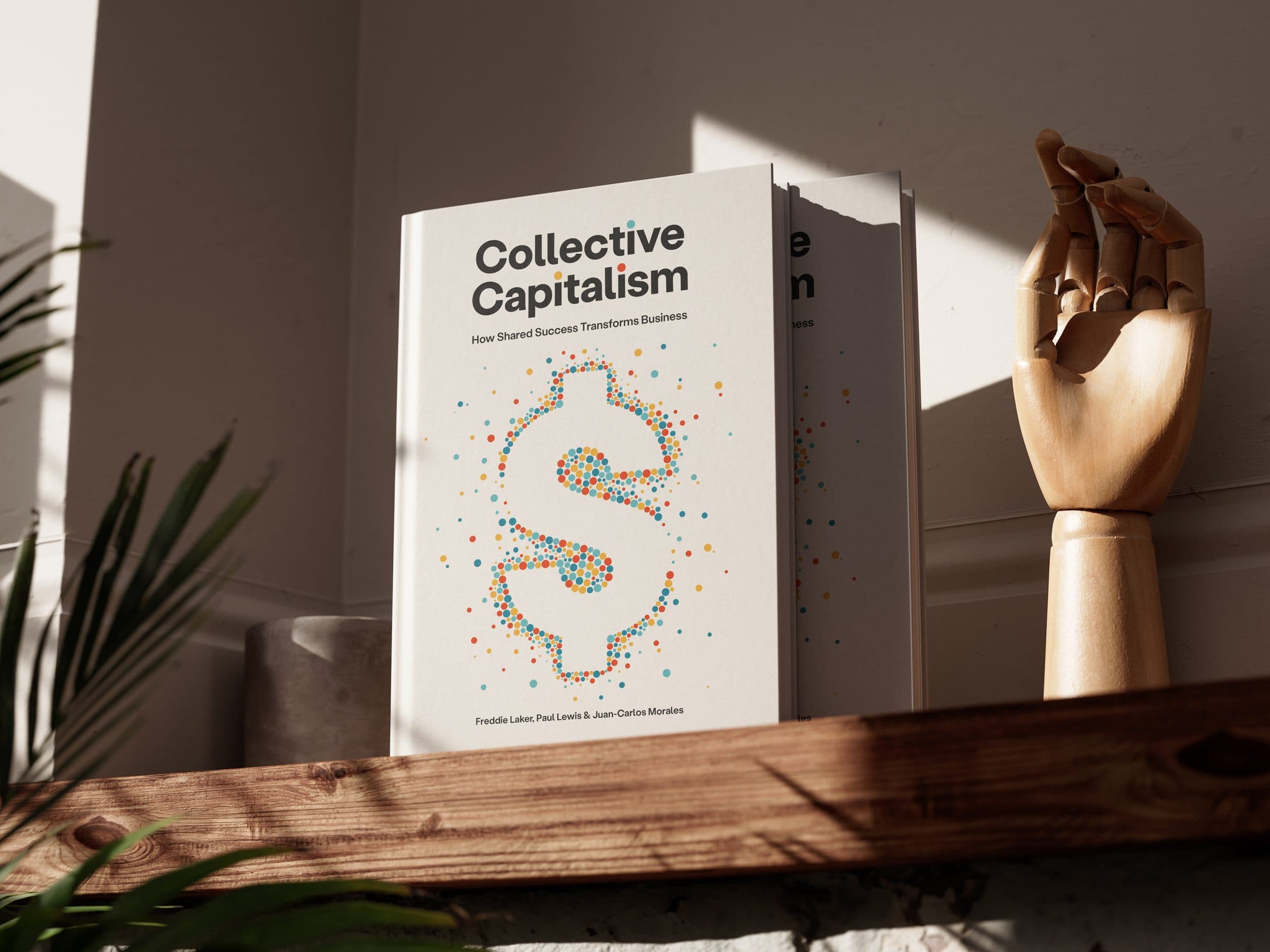
Collective Capitalism is available now on Amazon as a Kindle ebook. Search for 'Collective Capitalism: How Shared Success Transforms Business' or visit collectivecapitalism.org/book for the direct link.